Submitted by david on Wed, 13/04/2011 - 1:51pm
Submitted by gmp26 on Sun, 27/04/2008 - 1:35pm
Background
Advice regarding pregnancy-related health issues and lifestyle choices has been given for a long while, so in a sense there is no true start to this story. The issues discussed here relate to the previous NICE guidelines, issued in 2003, which advised caution, but not complete abstinence from alcohol, and which did not differ too much in style and content to the advice issued by the Department of Health at the same time.
Submitted by ajp82 on Sun, 27/04/2008 - 12:58pm
What should be the official advice for women about the consumption of alcohol during pregnancy?
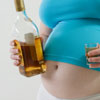 On 11th October 2007 several news sources reported on the revised guidelines on antenatal care to be published by NICE (National Institute for Health and Clinical Excellence) in March 2008. These guidelines were reported to advise that there is “no consistent evidence of adverse effects from low-to-moderate alcohol during pregnancy (less than one drink or 1.5 units per day) but the evidence is probably not strong enough to rule out any risk.”
Submitted by horace on Mon, 07/01/2008 - 12:08pm
 None of us are going to last for ever. Our prospects depend on our sex, our age, our lifestyle, our genes, and many other personal factors both known and unknown. Even with all this information we're all uncertain about the exact date of our death, but by looking at large groups of people who are like us, we can count how many die each year and so get an idea of the risks we face and how long we might live. Our risks can be summarised in different ways which are shown in the animation below.
Submitted by hauke on Wed, 05/12/2007 - 3:47pm
Background
Advice for pregnancy-related health issues regarding lifestyle choices has been given for a long while, so in a sense there is no true start to this story. The issues discussed here relate to the previous NICE guidelines issued in 2003, which advised caution, but not complete abstinence towards alcohol, and which did not differ too much in style and content to the advice issued by the Department of Health at the same time.
Submitted by hauke on Wed, 05/12/2007 - 3:28pm
What evidence is being used?
The Department of Health has, until May 2007, issued guidelines that are similar to those of NICE; the news story has arisen out of the fact that the DoH has changed the guidelines, while NICE has not. As O’Brian notes in the BMJ O'Brian2007, the new DoH advice does not rest on any new evidence, but merely on the reinterpretation of the risk associated with the already known evidence. Therefore this particular news story centres not so much on conflicting evidence supporting two different points of view, but on two different interpretations of the same evidence.
Submitted by hauke on Wed, 05/12/2007 - 2:27pm
What should be the official advice for women about the consumption of alcohol during pregnancy?
On 11th October 2007 several news sources reported on the revised draft guidelines on antenatal care that were to be published by NICE (National Institute for Health and Clinical Excellence) in March 2008. These guidelines are reported to advise that there is “no consistent evidence of adverse effects from low-to-moderate alcohol during pregnancy (less than one drink or 1.5 units per day) but the evidence is probably not strong enough to rule out any risk.”

